A shop window has two jobs: to catch the eye and at the same time to show what is happening inside the store. A conventional screen does the first and blocks the second. A transparent LED display resolves this conflict. It shows bright, moving content while the view into the store stays clear. In this article we explain how it works, what the technology can do and what to consider when planning.
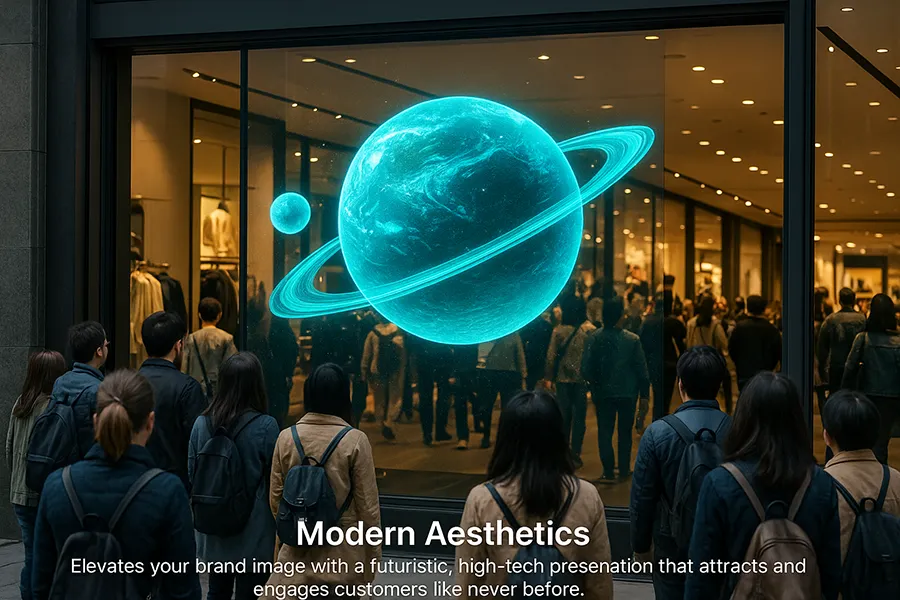
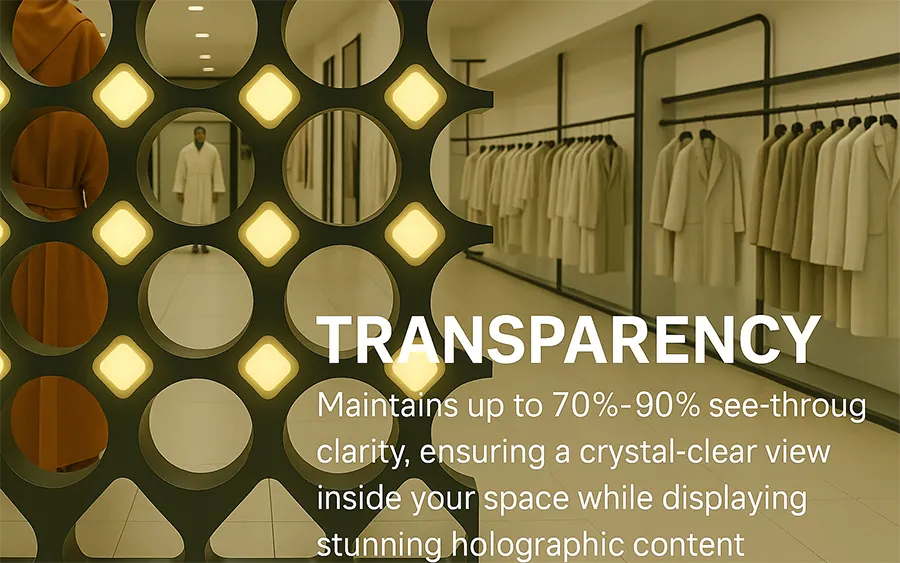
A transparent LED display consists of narrow, open-structured panels on which the LEDs sit in rows. Between the rows there is space you can see through. Our panels are only 2 mm thin and 70 to 90 percent transparent. From a distance the panels almost disappear and mostly the content remains visible. Because the images seem to float in the glass, these displays are often called holographic displays.
The view into the store stays clear. Passers-by see your advertising and at the same time your products, your interior and your team. The shop window stays a shop window.
Daylight stays in the room. A normal screen behind the glass darkens the space behind it. A transparent display lets most of the light through.
Bright enough for the sunny side. With 2500 to 5000 nits, content stays clearly visible even when the sun shines directly on the glass.
An effect that gets noticed. Content that seems to float in mid-air is still rare on the street. That is exactly what makes passers-by curious.
| Feature | Value |
|---|---|
| Pixel pitch | P3.5 / P3.91 / P5 / P6.25 / P10 |
| Panel thickness | 2 mm |
| Transparency | 70 to 90% |
| Brightness | 2500 to 5000 cd/m² |
| Module size | 1000 × 250 mm or 2000 × 250 mm |
| Refresh rate | from 3840 Hz |
The modules are combined into an area that fits your glass pane. You can find all specifications on the product page Holographic Transparent LED Display.
Both solutions have their place. The key difference is brightness and see-through.
| Transparent LED display | Indoor LED wall behind the glass | |
|---|---|---|
| View into the store | stays clear (70–90% transparent) | is blocked |
| Brightness | 2500–5000 cd/m² | 350–550 cd/m² |
| Sharpness up close | coarser (P3.5 to P10) | very fine (P1.25 to P4) |
| Ideal for | sunny shop windows where the view inside should stay | interiors, short viewing distances |
For a shop window that gets sun during the day, indoor modules are usually too dark. For a wall on the sales floor where customers stand right in front of it, an indoor LED wall with a fine pixel pitch is the better choice.
The rule of thumb also applies to transparent displays: the shortest comfortable viewing distance in metres roughly equals the pixel pitch in millimetres. Someone standing right at the glass still sees a fine picture at P3.5. For a large window seen mainly from across the street, a larger pixel pitch is enough. More in our article “LED Wall Pixel Pitch Explained”.
A transparent display needs slightly different content from a normal screen. A few practical tips:
That depends on size, location and the effect on the street, and is clarified case by case. We have summarised which departments in Vienna are responsible for facade advertising and which rules apply to LED screens in our article “LED Facade Advertising in Vienna: Permits and Planning”. We discuss this with you during planning and help you with the application.
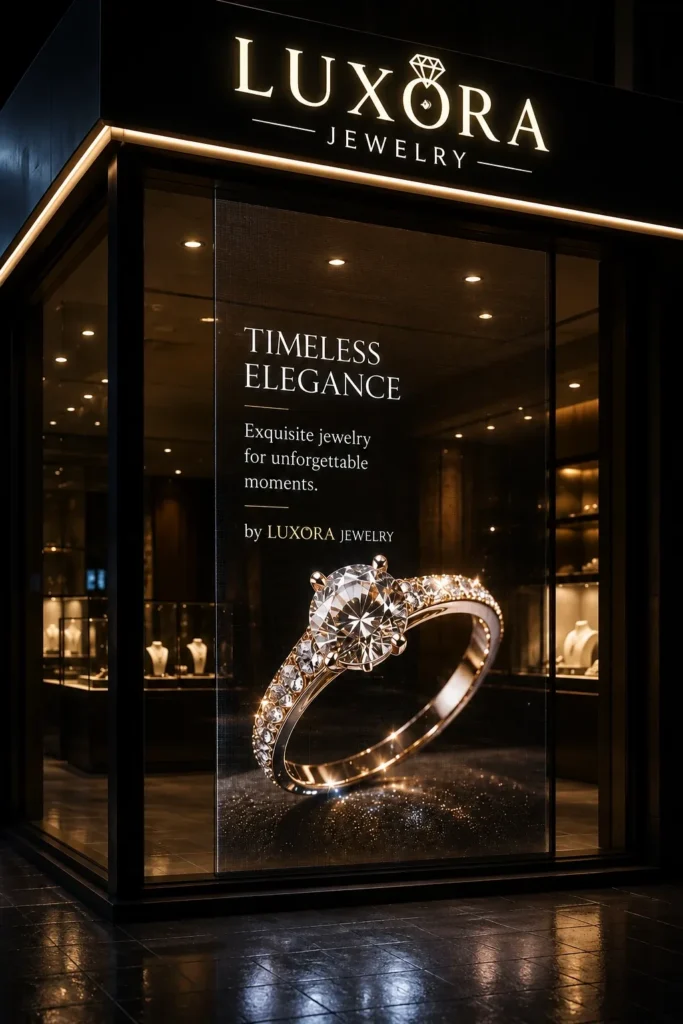
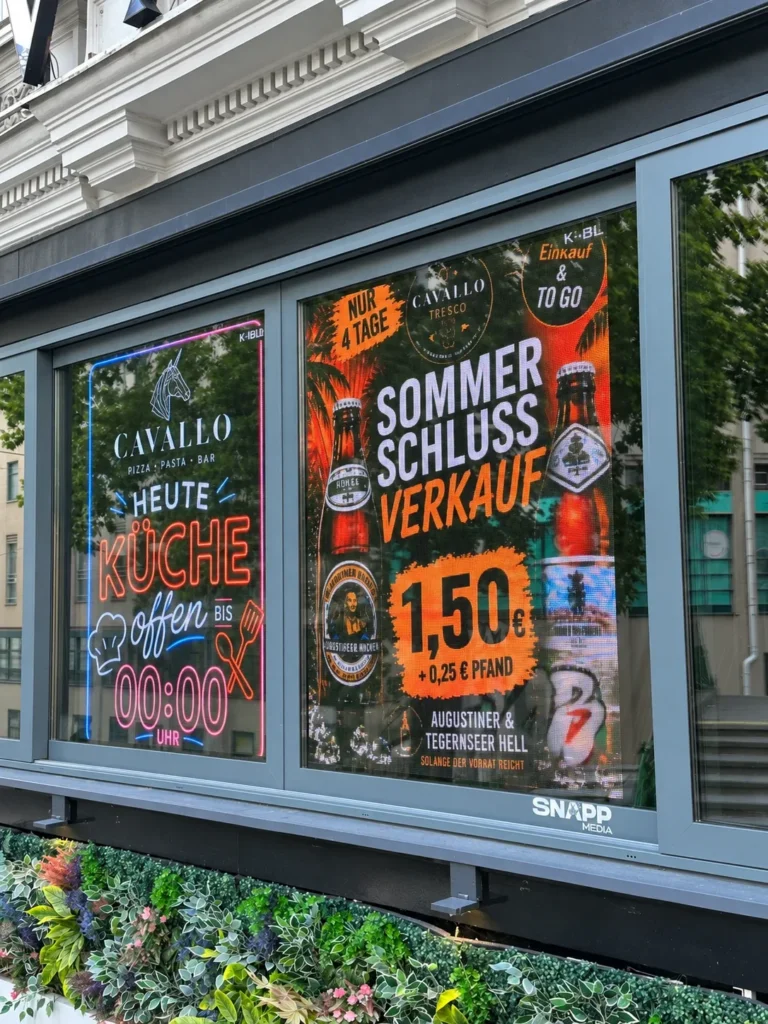
In the window of Cavallo, two transparent LED displays show how late the kitchen is open and the current promotions. The content is clearly visible from the street, while the view into the restaurant stays open.
You get an 18-month warranty, and we also provide service and repairs. Read more about the process on our page LED Wall Installation in Vienna.
How transparent is a transparent LED display?
Our panels are 70 to 90 percent transparent. From a normal distance you mainly see the content, and the store behind stays visible.
Is the display visible in sunlight?
Yes. With 2500 to 5000 nits it is much brighter than indoor screens and stays clearly visible even in direct sunlight.
What content works best?
Bright motifs on a black background. Black areas do not light up and look like empty glass, so the content seems to float in the window.
How large can a transparent display be?
The modules are 1000 or 2000 mm wide and 250 mm high and are combined into an area that fits your glass pane.
Can I see the display beforehand?
Yes. In our showroom at Speisinger Straße 71, 1130 Vienna, you can see the technology live, Monday to Friday from 10:00 to 17:00.